
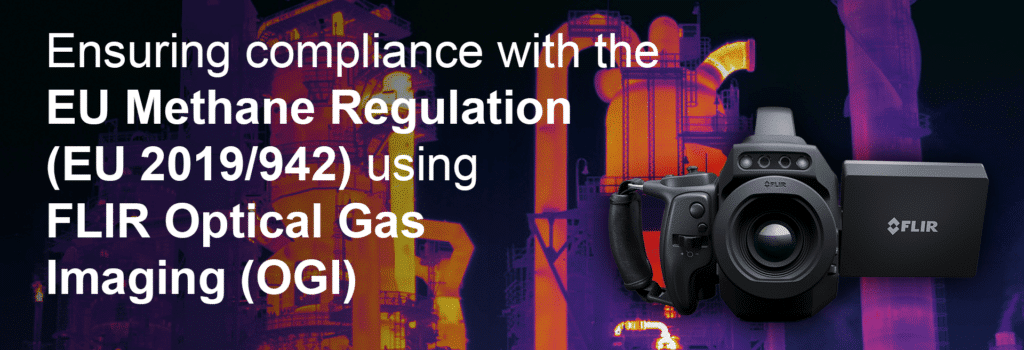
The 2024 amendments to Regulation (EU) 2019/942, now part of Regulation (EU) 2024/1106, bring significant changes to Leak Detection and Repair (LDAR) programs in the EU’s energy sector.
The Oil & Gas Methane Partnership 2.0 (OGMP 2.0) is the flagship oil and gas reporting and mitigation programme of the United Nations Environment Programme (UNEP). It is the only comprehensive, measurement-based international reporting framework for the sector.
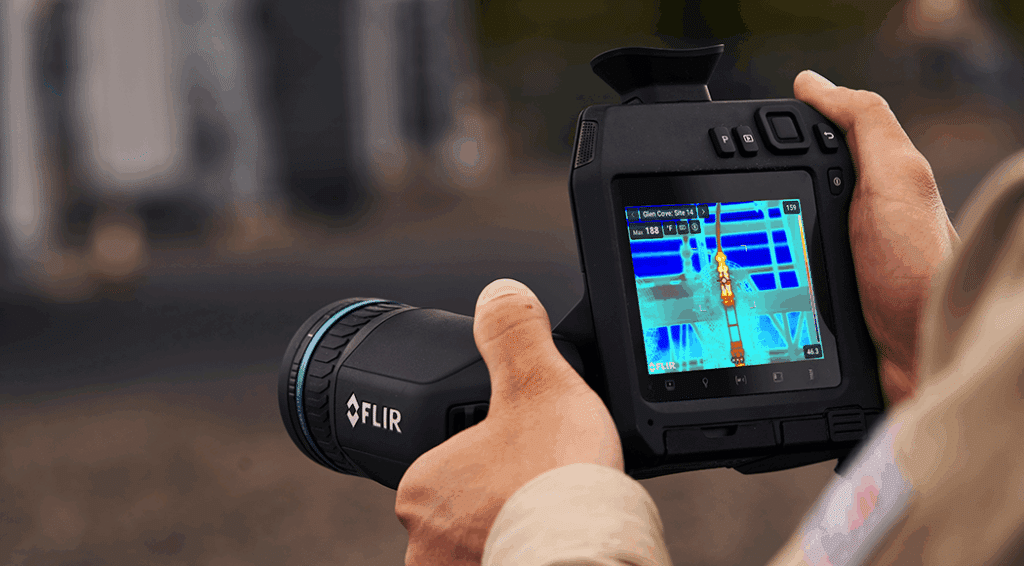
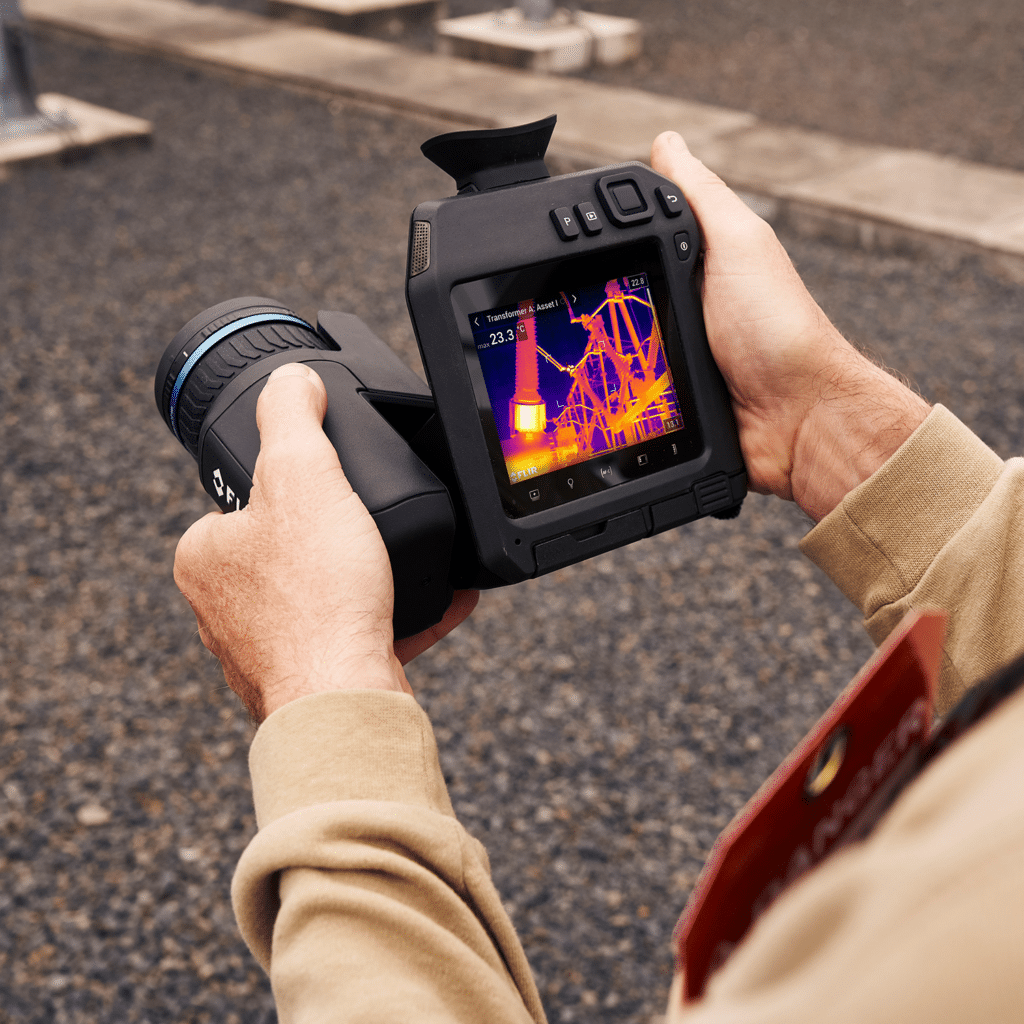
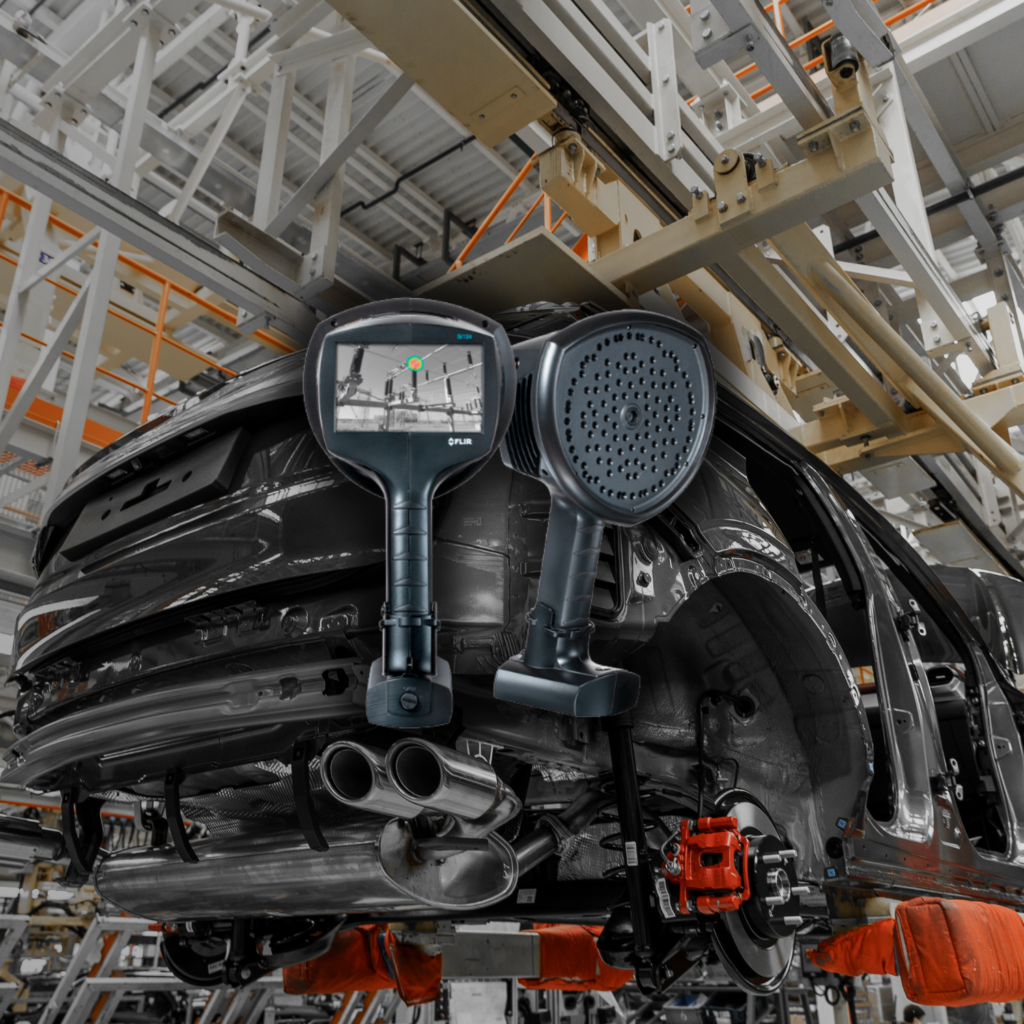
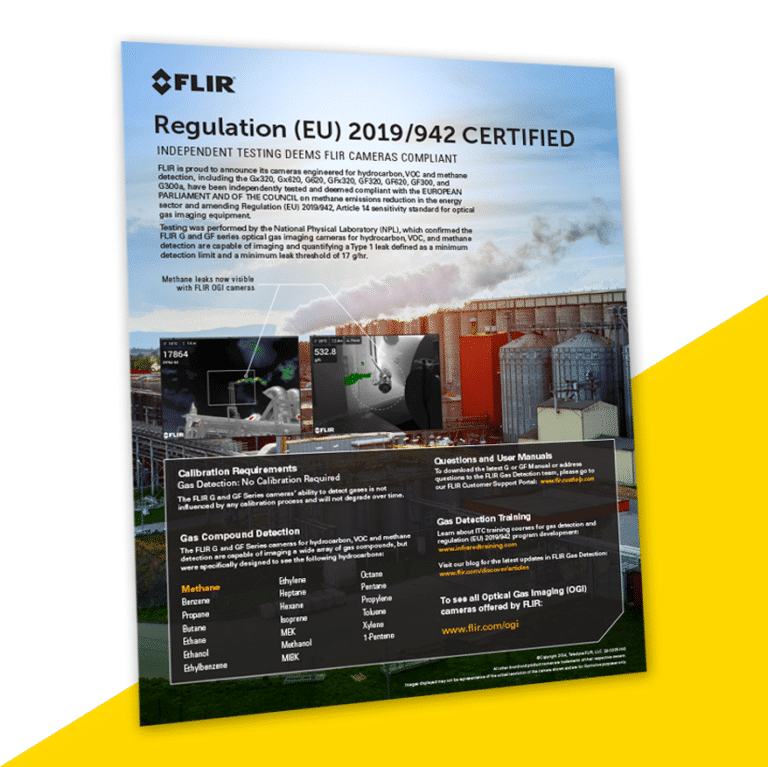
Test conducted on the Flir Gx320 and Gx620 Intrinsically Safe dual use optical gas imaging cameras, exhibit the ability to image gasses, with emission rates of 17g/h and 18g/h from a distance of 2m, with air/background temperatures and calm wind conditions taken into consideration. Methane and Propane gasses which are commonly found at petrochemical facilities were tested. Both cameras met the EPA Appendix K, section 6 standards both in Normal and patented HSM modes for finding small leaks faster.
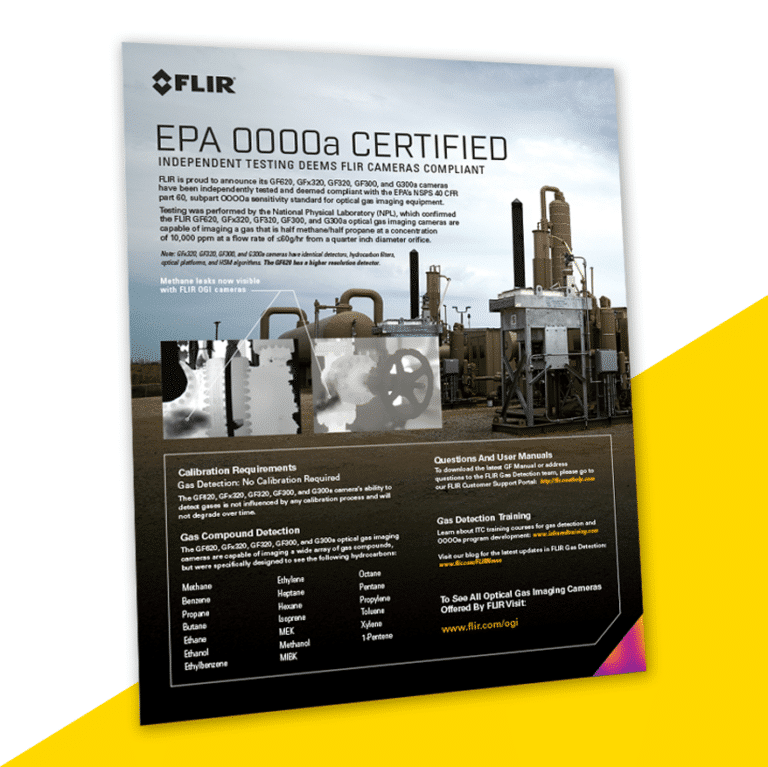
Both cameras have MWIR detectors spectrally filtered to see methane and volatile organic compounds (3.2 to 3.4 μm). They also complies with U.S: EPA OOOOa and Appendix K Regulations. The cameras also have quantification analytics onboard to do immediate leak detection rates onsite.
EU’s 2024 Methane Emission Regulations: A Major Step Towards Cleaner Energy
In a significant move to combat climate change and stabilize energy markets, the European Union has updated Regulation (EU) 2019/942 to address methane emissions from the energy sector. Let’s break down the key aspects of these new regulations, which came into force in April 2024.
The Path to Regulation
The journey began in September 2023, with the European Parliament’s committee adopting a negotiating position. By November 2023, an informal agreement was reached, leading to formal endorsements by the European Parliament and the Council in early 2024. The regulation was signed into law on April 11, 2024, and published in the Official Journal on April 17, 2024. This rigorous process highlights the EU’s commitment to effective climate action.
Tackling Methane Emissions
Central to the new regulation is a heightened focus on reducing methane emissions, a potent greenhouse gas. The EU emphasizes robust Leak Detection and Repair (LDAR) programs to find and fix leaks quickly, aligning with its broader climate goals and the Methane Strategy.
Strengthened Monitoring and Reporting
Energy companies now face stricter monitoring and reporting requirements. They must promptly detect and repair methane leaks, ensuring transparency and accountability in their operations. These measures are aimed at minimizing the environmental impact and promoting sustainable practices within the sector.
Integration with Market Rules
The regulation also aligns energy market rules with financial market legislation, strengthening the enforcement of market manipulation laws. This integration ensures that companies uphold high standards of operational and environmental integrity, indirectly supporting effective LDAR programs.
Protecting Consumers and Markets
Enhanced LDAR programs are crucial for preventing large-scale methane leaks, which can disrupt energy markets and cause significant economic and environmental damage. By mitigating these risks, the EU aims to protect consumers and ensure a stable energy market.
A Greener Future
The 2024 amendments to Regulation (EU) 2019/942 reinforce the EU’s commitment to reducing greenhouse gas emissions and fostering a transparent, sustainable energy sector. These changes are a vital part of the EU’s broader strategy to tackle climate change and ensure market stability.
With these updates, the EU sets a strong example for integrating environmental responsibility with economic stability, paving the way for a sustainable energy future.